
Xinping Guan, Professor, IEEE Fellow
Shanghai Jiao Tong University, China
Opening Speaker
Xinping Guan (Fellow, IEEE) received the B.Sc. degree in mathematics from Harbin Normal University, Harbin, China, in 1986, and the Ph.D. degree in control science and engineering from the Harbin Institute of Technology, Harbin, China, in 1999. He is currently the Chair Professor of Shanghai Jiao Tong University, Shanghai, China, where he is also the Dean of School of Electronic, Information and Electrical Engineering, and the Director of the Key Laboratory of Systems Control and Information Processing, Ministry of Education of China. Before that, he was the Executive Director of Office of Research Management, Shanghai Jiao Tong University, a Full Professor, and the Dean of Electrical Engineering, Yanshan University, Qinhuangdao, China. He has authored or coauthored five research monographs, more than 200 papers in IEEE transactions and other peer-reviewed journals, and numerous conference papers. His research interests include industrial network systems, smart manufacturing, and underwater networks. As a Principal Investigator, he has finished/been working on more than 20 national key projects. He is the Leader of the prestigious Innovative Research Team of the National Natural Science Foundation of China. He is an Executive Committee Member of Chinese Automation Association Council and the Chinese Artificial Intelligence Association Council. Dr. Guan was the recipient of the Second Prize of the National Natural Science Award of China in both 2008 and 2018, First Prize of Natural Science Award from the Ministry of Education of China in both 2006 and 2016, and IEEE Transactions on Fuzzy Systems Outstanding Paper Award in 2008. He is a National Outstanding Youth honored by NSF of China, and Changjiang Scholar’s by the Ministry of Education of China and State-Level Scholar of New Century Bai Qianwan Talent Program of China.

Vincenzo Piuri, Professor, IEEE Fellow
Università degli Studi di Milano, Italy
Artificial Intelligence for Biometric Technologies and Systems
Biometrics concerns the study of automated methods for identifying an individual by measuring one or more physical or behavioral features of him. Certain physical human features or behaviors are characteristics that are specific and can be uniquely associated to one person. Retinas, iris, DNA, fingerprint, palm print, or pattern of finger lengths are typical physical features that are specific to individuals. Also the voice print, gait, or handwriting can be used to this purpose. Nowadays biometrics is rapidly evolving. This science is getting more and more accurate in identifying persons and behaviors. Consequently, these technologies become more and more attractive and effective in critical applications, such as to create safe personal IDs, to control the access to personal information or physical areas, to recognize terrorists or criminals, to study the movements of people, and to monitor the human behavior. The use of biometrics in the real life often requires very complex signal and image processing and scene analysis, for example encompassing biometric feature extraction and identification, individual tracking, face tracking, eye tracking, liveness/anti-spoofing tests, and facial expression recognition.
Artificial intelligence techniques (including neural networks, fuzzy logic, evolutionary computing, and multi-agent systems) have been proved to be useful and effective in addressing this kind of data processing, especially when it is difficult to identify an algorithm while sufficiently descriptive examples are available, or when fuzzy descriptions are more natural to capture the essence of the problem, or when complex non-linear optimization is needed, or when multiple agents cooperate in solving the application problem. This talk will review the domain of biometrics, its applications in various domains and the relevance of artificial intelligence, in particular neural networks and deep learning) to effectively solve various problems in these applications.
Bio
Vincenzo Piuri has received his Ph.D. in computer engineering at Polytechnic of Milan, Italy (1989). He is Full Professor in computer engineering at the University of Milan, Italy (since 2000). He has been Associate Professor at Polytechnic of Milan, Italy and Visiting Professor at the University of Texas at Austin, USA, and visiting researcher at George Mason University, USA. His main research interests are: artificial intelligence, computational intelligence, machine learning, pattern analysis and recognition, intelligent systems, signal and image processing, biometrics, intelligent measurement systems, industrial applications, digital processing architectures, fault tolerance, cloud computing infrastructures, and internet-of-things. Original results have been published in 400+ papers in international journals, proceedings of international conferences, books, and book chapters.
He is Fellow of the IEEE, Distinguished Scientist of ACM, and Senior Member of INNS. He is IEEE Region 8 Director (2023-24), and has been IEEE Vice President for Technical Activities (2015), IEEE Director, President of the IEEE Systems Council, President of the IEEE Computational Intelligence Society, Vice President for Education of the IEEE Biometrics Council, Vice President for Publications of the IEEE Instrumentation and Measurement Society and the IEEE Systems Council, and Vice President for Membership of the IEEE Computational Intelligence Society.
He has been Editor-in-Chief of the IEEE Systems Journal (2013-19). He is Associate Editor of IEEE Open Journal on Systems Engineering and has been Associate Editor of the IEEE Transactions on Computers, the IEEE Transactions on Cloud Computing, the IEEE Transactions on Neural Networks, the IEEE Transactions on Instrumentation and Measurement, and IEEE Access. He received the IEEE Instrumentation and Measurement Society Technical Award (2002), the IEEE TAB Hall of Honor (2019), and the Rudolf Kalman Professor Title of the Obuda University, Hungary. He is Honorary Professor at: Obuda University, Hungary; Guangdong University of Petrochemical Technology, China; Northeastern University, China; Muroran Institute of Technology, Japan; Amity University, India; Galgotias University, India; Chandigarh University, India; and BIHER, India.
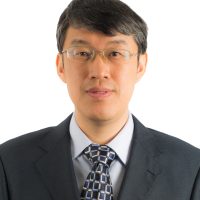
Xiaoli Li, Professor, IEEE Fellow
Institute for Infocomm Research, Singapore
Powering Real-World Transformation with Big Data and Machine Learning
This presentation introduces some impact of big data and machine learning across crucial industries such as manufacturing, semiconductor, transportation, finance, and aerospace.
Beginning with manufacturing and aerospace, experience firsthand how AI-driven time series analytics emerge as transformative tools, enabling predictive maintenance and condition monitoring. Discover how these advancements optimize operations, minimize downtime, and elevate productivity to unprecedented levels. Moving on to semiconductor applications, witness how AI becomes indispensable in optimizing Design of Experiments (DOE) and detecting defects in 3D structures. Uncover how these applications uphold the high standards of product quality and reliability, driving innovation and competitiveness to new heights. In transportation, a new era unfolds with AI’s intervention, where predictive modeling and real-time analytics revolutionize safety and efficiency. Explore the interesting mechanisms behind smart traffic light management systems ensuring seamless traffic flow and alleviating congestion. In finance, witness a paradigm shift as AI-driven HR analytics redefine talent management, empowering proactive strategies to retain top talent. Explore predictive models that forecast employee attrition, enabling organizations to cultivate a stable and motivated workforce.
Embark on a journey to uncover how AI and data science are reshaping industries, igniting innovation, and paving the way for real-world transformation.
Bio
Xiaoli currently leads the Machine Intellection department, comprising over 100 AI and data scientists, making it the largest AI and data science group in Singapore, alongside serving as a senior principal scientist at the Institute for Infocomm Research, A*STAR. Additionally, he holds a professor position at Nanyang Technological University. Xiaoli’s extensive leadership extends to joint lab director roles for major companies like DBS Bank and KPMG. Since 2020, he has contributed to key governmental initiatives as a member of the Information Technology Standards Committee (ITSC) at ESG Singapore and the Infocomm Media Development Authority (IMDA). Moreover, Xiaoli serves as a health innovation expert panel member for the Ministry of Health (MOH), an expert panel member for the Ministry of Education (MOE), and an AI advisor for the Smart Nation and Digital Government Office (SNDGO) at the Prime Minister’s Office, showcasing his pivotal involvement in both government and industry sectors.
With a broad spectrum of research interests, Xiaoli focuses on cutting-edge domains such as AI, data mining, machine learning, and bioinformatics. His significant contributions are reflected in his extensive publication portfolio, comprising over 350 peer-reviewed papers and earning him numerous accolades, including over ten best paper awards. As Editor-in-chief of the Annual Review of Artificial Intelligence and an Associate Editor for esteemed journals like IEEE Transactions on Artificial Intelligence and Knowledge and Information Systems, Xiaoli plays a crucial role in shaping academic discourse. Additionally, he chairs conferences and serves as an area chair for leading AI, machine learning, and data science conferences such as AAAI, IJCAI, ICLR, NeurIPS, KDD, and ICDM.
Beyond academia, Xiaoli leverages his wealth of experience to drive impactful R&D projects, having successfully led over 10 initiatives in collaboration with prominent industry players across sectors such as aerospace, telecom, insurance, and professional services. Recognized as an IEEE Fellow and a Fellow of the Asia-Pacific Artificial Intelligence Association (AAIA), Xiaoli’s expertise is acknowledged globally. Stanford University has identified him as one of the top 2% scientists in the AI domain, while Research.com ranks him among the top computer scientists worldwide.
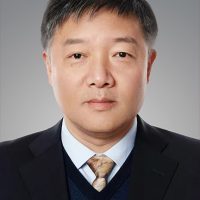
Hai Jin, Professor, IEEE Fellow
Huazhong University of Science and Technology, China
Understanding Computability Net: A Distributed System Perspective
Computability net provides opportunities to transcending state-of-the-art technologies in AI, computing and network. This talk will delve into the evolution and architectural design of computability net from the perspective of distributed systems, tracing traditional models like grid and cloud computing to modern computability networks. The discussion will then focus on the specific challenges posed by computability net, particularly in terms of managing heterogeneous compute nodes and network connections. Architectural strategies that effectively address these challenges and facilitate optimal resource allocation across multiple computing centers will be explored. Additionally, the talk will indicate the diverse applications of computability networks in areas such as AI, scientific computing, and beyond, demonstrating their wide-reaching impact and potential.
Bio:
Hai Jin is a Chair Professor of computer science and engineering at Huazhong University of Science and Technology (HUST) in China. Jin received his PhD in computer engineering from HUST in 1994. In 1996, he was awarded a German Academic Exchange Service fellowship to visit the Technical University of Chemnitz in Germany. Jin worked at The University of Hong Kong between 1998 and 2000, and as a visiting scholar at the University of Southern California between 1999 and 2000. He was awarded Excellent Youth Award from the National Science Foundation of China in 2001.
Jin is a Fellow of IEEE, Fellow of CCF, and a life member of the ACM. He has co-authored more than 20 books and published over 900 research papers. His research interests include computer architecture, parallel and distributed computing, big data processing, data storage, and system security.

Taghi M. Khoshgoftaar, Professor
Florida Atlantic University, USA
Security Analytics and Big Data Challenges
Cybercrime now costs trillions of dollars annually. Machine learning can help to detect cyberattacks in big data, but it needs to overcome several challenges to be effective. Like the proverbial “needle in a haystack” analogy, severe class imbalance can cause machine learning classifiers difficulty. To compound this problem further, class rarity is not uncommon where only very few instances are available from the positive class causing classifiers further trouble in being able to discriminate between the classes. We evaluate applying sampling techniques to treat the class imbalance problems for detecting cyberattacks in big data. Properly preprocessing the input data is an important step, and we discuss data quality issues of the input features. Finally, we cover how feature selection can also be helpful for detecting cyberattacks in big data.
Bio
Dr. Taghi M. Khoshgoftaar is Motorola Endowed Chair professor of the Department of Computer and Electrical Engineering and Computer Science, Florida Atlantic University and the Director of NSF Big Data Training and Research Laboratory. His research interests are in big data analytics, data mining and machine learning, health informatics and bioinformatics, social network mining, security analytics, fraud detection, and software engineering. He has published more than 850 refereed journal and conference papers in these areas. He was the conference chair of the IEEE International Conference on Machine Learning and Applications (ICMLA 2019 and ICMLA 2016). He is the Co-Editor-in Chief of the journal of Big Data. He has served on organizing and technical program committees of various international conferences, symposia, and workshops. Also, he has served as North American Editor of the Software Quality Journal and was on the editorial boards of the journals Multimedia Tools and Applications, Knowledge and Information Systems, and Empirical Software Engineering and is on the editorial boards of the journals Software Quality, Software Engineering and Knowledge Engineering, and Social Network Analysis and Mining.

Roberto Tonelli, Professor
University of Cagliari, Italy
Blockchain solutions and Made in Italy
Blockchain technology is impacting everyday life offering new perspectives, applications and business opportunities in sectors such as e-commerce, identity management, utilities exchange and so on. This talk will assess a short comparison among different Blockchain technologies and will examine the more recent trends and perspectives on the applications of this technology to certify provenance of goods in supply chains for national products and in particular to certify “Made in Italy” productions. Italian and European blockchain solutions will be examined.
Bio
Roberto Tonelli is Full Professor of Informatics at the University of Cagliari’s Department of Mathematics and Computer Science. He’s been Coordinator for the Ph.D. program in Mathematics and Informatics at University of Cagliari. He has been awarded for his influential blockchain research (50 Topmost influential paper in 2018) by “Blockchain Connect Conference” – SanFrancisco Jan 2019.
He founded the academic spin-off “Agile By Chain”, which provides services and consultancies on blockchain technologies. He is the National Appointee for former MISE (Italian Ministry of Economic Development) for EBP (European Blockchain Partnership) Appointment of National Representatives, Appointment of representatives for the new EBSI use cases EUROPEAN SELF-SOVEREIGN IDENTITY/EIDAS WORKING GROUP (from 2020 ongoing).
He has two Ph.D. titles, in Physics and in Software Engineering and has been visiting researcher at Electrical Engineering and Computer Science Dept. Berkeley University, California (2000/01 and 2006/07) and at University of Maryland, Washington DC (1999). He authored more than 150 papers with about 5000 citations on scholar and H-index 37.
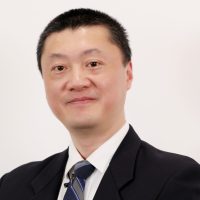
YuXiang Chen
IBM Distinguished Engineer, IBM
Practices of Machine Learning and Optimization with Quantum Computing
In many cases, real problems need to involve both Machine Learning and Optimization, we usually start from building predictive models based on “data” when lack of insight, but after that, sometimes we intend to rebuild models based on “rules” to find an optimal solution. This talk will introduce few practical ways to leverage Quantum Computing to accelerate problem solving on both AI (Artificial Intelligence) and OR (Operational Research), including full space searching, dot-production of functions, etc. Powered by the next generation computer in future, we could improve both speed and accuracy in real world problems solving.
Bio:
YuXiang CHEN is a Distinguished Engineer from IBM, most working on designing software solutions with the new technologies and solving real problems for clients, His research interests most focus on AI and Quantum, As a leader of IBM CTO office and IBM Open Innovation Community, he is leading many innovations and run IBM internal academy education in Great China as well, covering Machine Learning, Deep Learning, Quantum Computing and Optimization. In recent years, he published 5 books and many patents on these areas.
YuXiang has rich experience on architecture design and Banking industry solutions, he is both IBM certified IT specialist and architect for many years. In most recently, he is working on put all these technologies together in practical industry solutions.
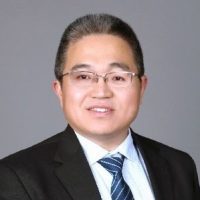
Fu Xu, Professor
Beijing Forestry University, China
Research and Application of Forestry Artificial Intelligence
Content: Introduce the main problems currently faced by forestry and how artificial intelligence can solve these problems. Combining several typical cases, introduce the latest progress of forestry artificial intelligence.
Bio:
Fu Xu, Professor of Beijing Forestry University (BJFU), Dean of School of Information Science and Technology of BJFU, Dean of School of Artificial Intelligence of BJFU, Chief Scientist of National Key R&D Program, Chief Scientist of Emergency Open Competition Project of National Forestry and Grassland Administration